Assistive Technology Projects
Assistive Technology for University Students (ATUS)
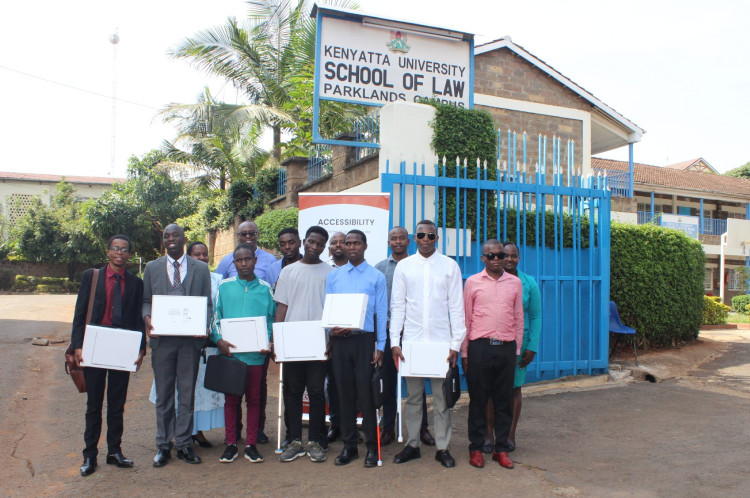
Blind law students in Kenya rely on Braille, but since their professors cannot read braille, reports must be transcribed, causing delays. inABLE this partnered with Apple to launch ATUS for blind law students. So far, 15 students have received digital skills training and MacBook laptops equipped with assistive technology, empowering them to read, write, and conduct legal research independently in their classrooms.
According to World Bank, there are approximately one billion people, or 15% of the world’s population, living with some form of disability, and 80 million in Africa (African Studies Centre - UN). Eighty per cent of Persons with Disabilities (PWDs) live in developing countries, according to the UN Development Program (UNDP).
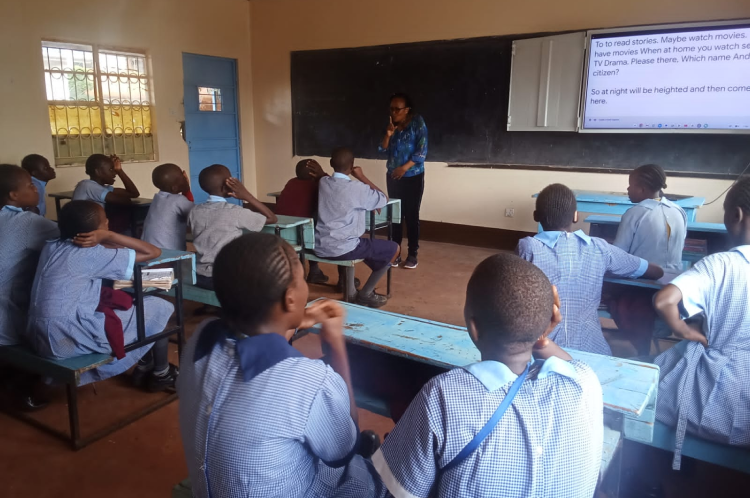
AI Assistive Technology for the deaf and hard of hearing in Kenya
In Kenyan schools for the deaf, both students and teachers struggle with knowledge of sign language which is a critical tool for the deaf to communicate. To bridge this gap, inABLE is piloting an AI program at Kambui School for the Deaf, integrating assistive technology into the classroom to enhance learning. The initiative introduces real-time captioning technology, AI-powered educational platforms, and specialized hardware and software to support both teachers and students and complement sign language.