Pelemo Ava Nyajo Redefines Pride, Power, and Possibility in Disability

inableAdmin
During this year’s Disability Pride Month, inABLE is spotlighting powerful voices that are challenging perceptions and reshaping what it means to be a person with a disability. One of these voices is 23-year-old Nigerian advocate, writer, and artist, Pelemo Ava Nyajo. Her journey is one of pain, purpose, and pride, not in spite of her disability but because of the depth and clarity it has brought to her life.
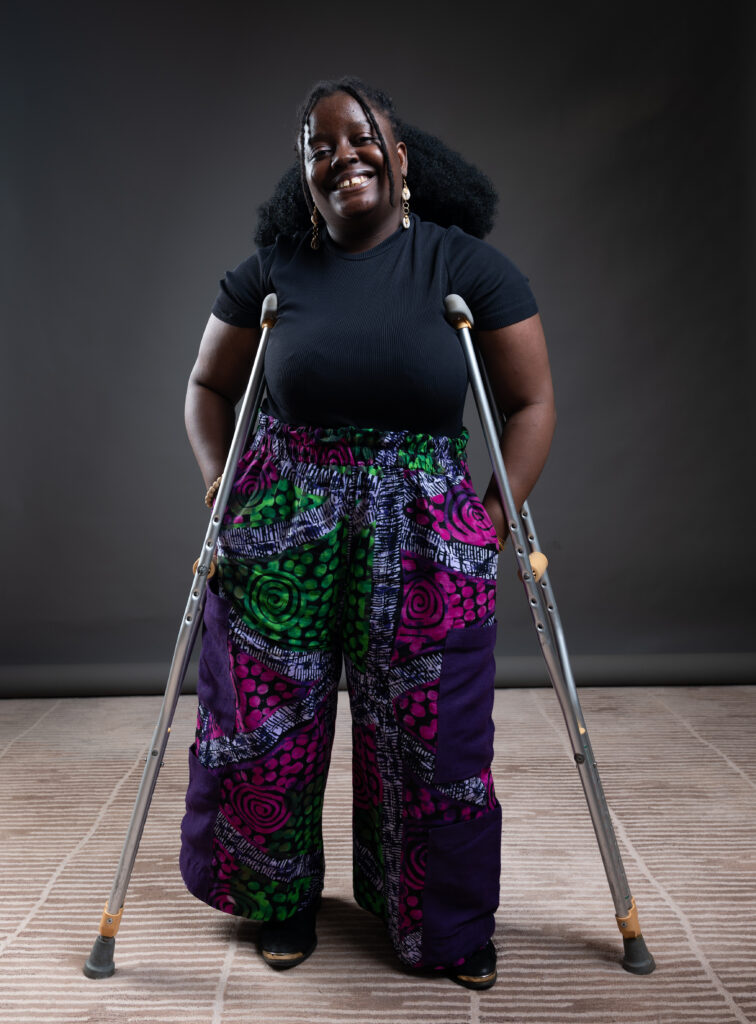
Pelemo has polyostotic fibrous dysplasia, a rare chronic disease that causes her bones to weaken and deform over time. The condition has required multiple surgeries and now makes crutches a part of her daily mobility. Yet, the real weight she speaks about isn’t just physical. “I am also disabled by the barriers that exist as a result of the impairment I have,” she says. Despite these barriers, Pelemo is unwavering in her belief that her life has meaning and that others like her deserve access, understanding, and visibility.
For Pelemo, disability pride is about refusing to conform to a world that tries to make people like her invisible. “It is consciously living in the truth that I belong, that this body of mine belongs here,” she explains. Her definition of pride is rooted in resistance against ableism, inaccessibility, and the assumption that a life with disability is less full or valuable. Her pride is also rooted in joy. “I am as human as any other human. I am living. I am happy.”
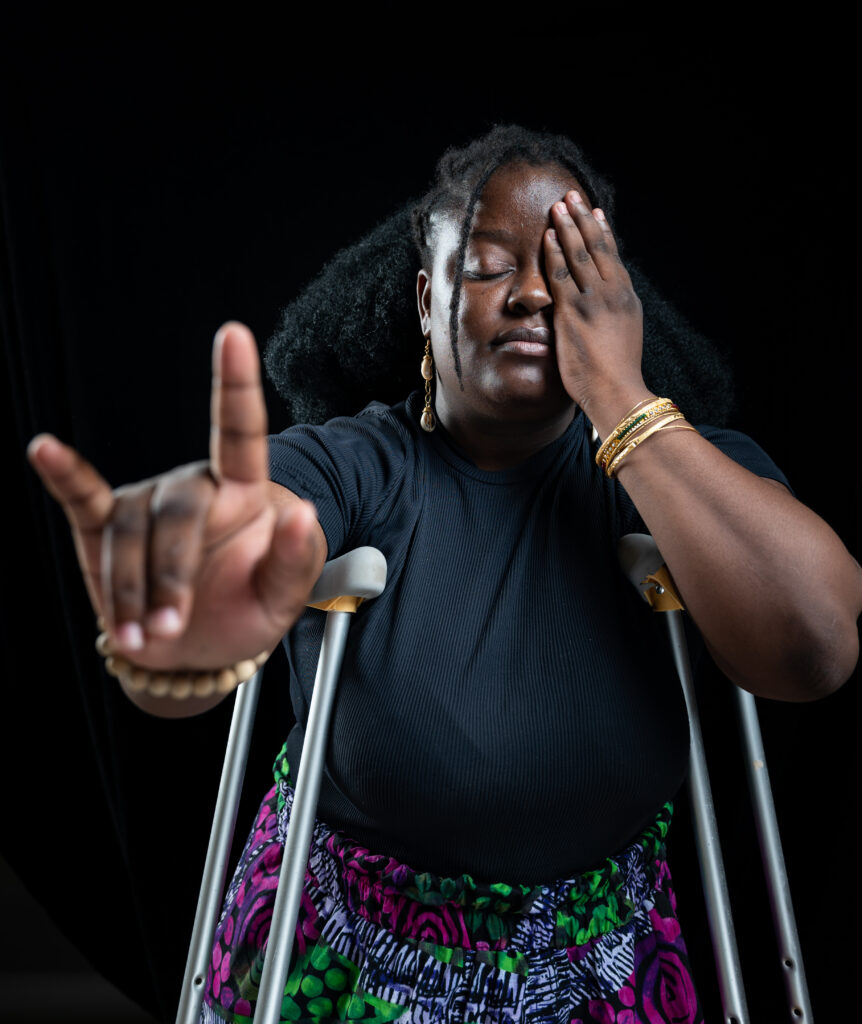
But getting to that place took time. In her childhood, Pelemo held on to the hope of one day being “normal.” Receiving a diagnosis without a cure was devastating. “I had to deconstruct my own internalized ableism,” she says. The turning point came when she started engaging with others in the disability community. “When I started to see my body as normal… I began to accept and even love myself.”
Pelemo speaks openly about the challenges she continues to face, from loneliness and limited mobility to lost dreams due to a lack of access. “Even the people who love me most don’t fully understand how deeply woven disability is with who I am,” she shares. Despite this, she continues to build bridges. Through her initiative, Movement Beyond Walls, she creates opportunities for people with and without disabilities to connect through art and play, creating a more inclusive narrative for future generations.
Art, for Pelemo, is more than expression. It is survival. “On those lonely days, when I had no human soul to understand, I would regurgitate feelings on paper. Those words held me.” Her poetry is a way to make disabled life visible, familiar, and no longer taboo. It is also a way to hold space for something she does intentionally for others who are often “othered.”
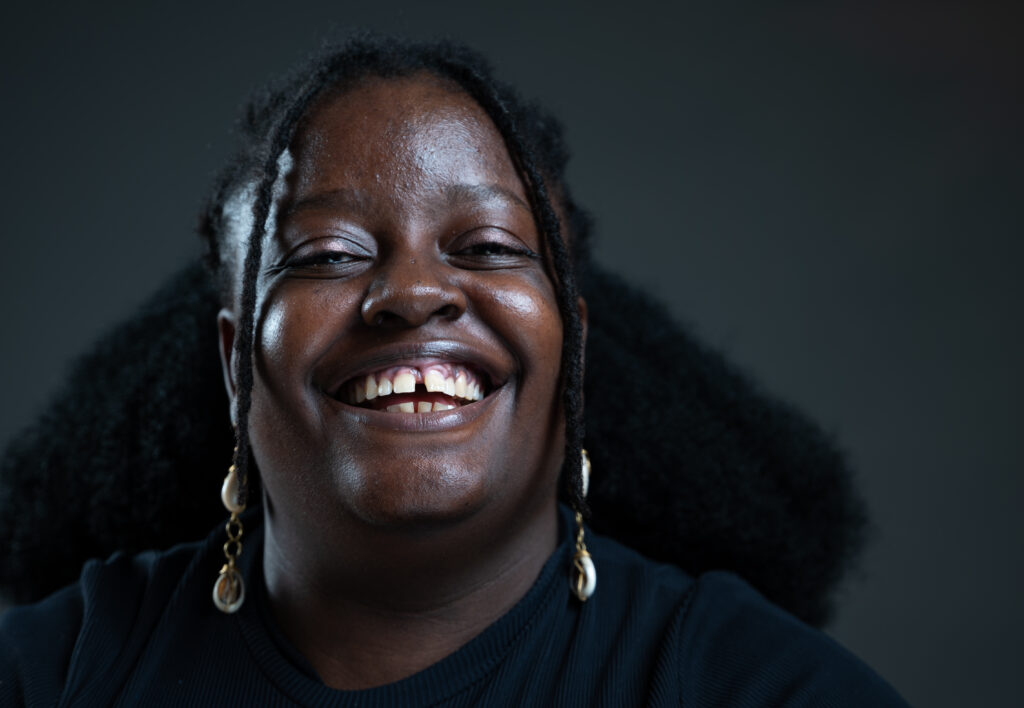
Her journey has been shaped by powerful learning experiences, such as participating in the Commonwealth Disabled People Forum Youth Leadership Training and attending the Inclusive Africa Conference 2025. These experiences helped her understand the social model of disability and her place in a world that often fails to include her. “I realized that disability inclusion is essential to how we determine the worth of a human being,” she says.
Today, Pelemo sees her activism as a natural part of who she is. It is not just because of her disability, but because she cares deeply about others. She says, “I speak up because I am disabled and I care. My disability helps me see and understand things in a deeper way.”
To other young people with disabilities, her message is firm and full of hope: “You are necessary for the revolution. You belong here. Speak it. Embody it. It is such a sacred thing to be you.”
As we observe Disability Pride Month 2025 under the theme “We Belong Here, and We’re Here to Stay,” Pelemo Ava Nyajo reminds us that belonging is not a privilege; it is a right. Her story challenges all of us to confront exclusion, to embrace difference, and to help design a world where everyone is truly seen, heard, and included.
Written by Faith Rimas, inABLE