Press Play to Learn: How Technology is Helping Students with Visual Impairment Hit the Right Notes

inableAdmin
By Rodha, Grade 9 Student
My name is Rodha, and I am in Grade 9 at St Lucy’s Primary School for the Blind in Meru County, Kenya. I have albinism, which affects my vision, so I sometimes need extra support in class. My Chromebook has become more than just a learning tool. It is like having a second teacher who is always available when I need help understanding or reviewing something, especially now, as I prepare for my Kenya Junior Secondary Education Assessment (KJSEA).
One of the most helpful features of the Chromebook is the ability to record lessons. If a topic moves too fast or I need more time to understand a concept, I go back and listen to the recording during my revision time. It has given me more independence and confidence in my studies.
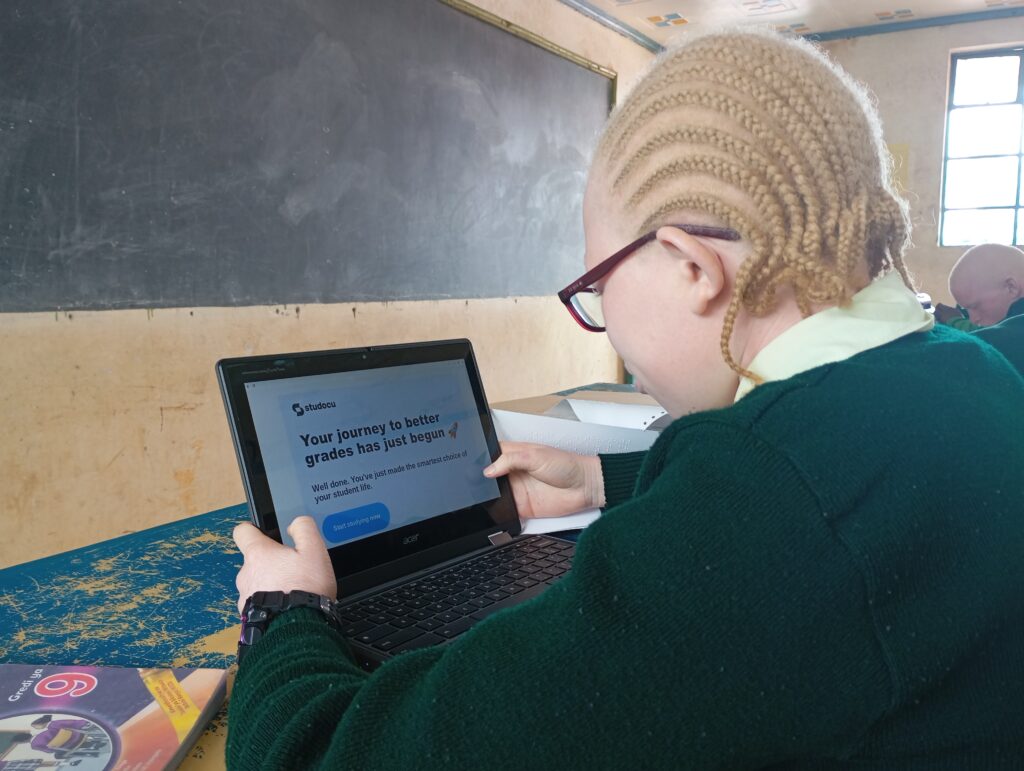
In music class, our teacher uses software called Maestro to record different voice parts and music notes. He then shares these files with us on our Chromebooks. This has allowed each of us to practice individually during our free time. When we finally come together as a group, we are ready to sing or perform without needing too many rehearsals. So far, we have prepared over 30 musical items and selected 18 for the Kenya National Music Festival competitions.
Learning with a Chromebook has made school more enjoyable. It allows me to keep up in class, explore creative subjects like music, and study at my own pace. For me, it has transformed how I learn.
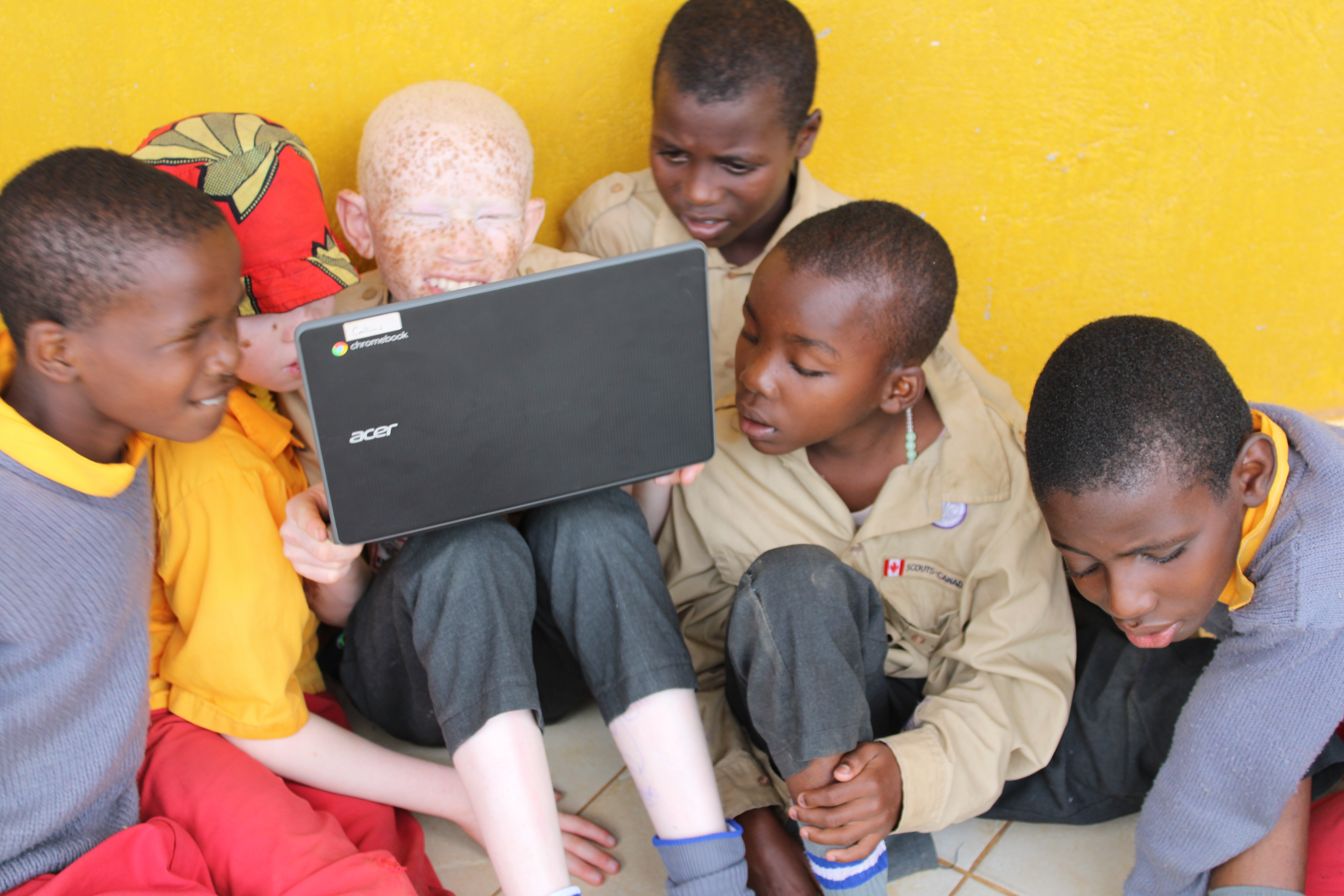
Thank you to Teacher Douglas for always believing in us and making sure we have access to these devices, even during our free time. You have shown us that having the right tools and support makes all the difference.
inABLE’s Impact on Inclusive Learning
Rodha’s story reflects how technology can remove learning barriers for students with visual disabilities. inABLE understands that students who are blind, have low vision, or live with multiple disabilities need tailored tools and training to succeed.
For the last 16 years, inABLE has worked in partnership with schools for the blind in Kenya to set up and run eight fully equipped Assistive Technology Labs. These labs, located in counties such as Kiambu, Meru, Siaya, Kajiado, and Mombasa, are designed to make digital learning accessible to all students. Each lab includes adaptive software, screen readers, accessible hardware, and hands-on training from our expert team.
Our approach goes beyond basic skills. Students are taught how to type, send emails, format documents, browse online content, and even build websites. Peer-to-peer support is encouraged, with advanced learners mentoring others, creating a collaborative environment where everyone grows together.
At a time when more than one billion people globally live with disabilities, with 80% in developing countries, stories like Rodha’s remind us of the power of inclusive education. By bridging the digital gap through assistive technology, inABLE is helping students unlock new opportunities in education, employment, and daily life.
Edited by Douglas Chiriswa and Faith Rimas, inABLE