AI Captions Transform Learning at Kambui Primary School for the Deaf

inableAdmin
The morning lessons at Kambui Primary School for the Deaf begin in quiet anticipation. As the teacher speaks, their words appear instantly on a large screen at the front of the class. Grade 6, 7, and 8 students follow each line with curiosity and focus, fully understanding every word as the lesson unfolds.
This transformation is powered by artificial intelligence. Located in Kiambu County, Kambui Primary School for the Deaf is among the first institutions in Kenya to use AI captions to make classroom learning more accessible for deaf and hard-of-hearing students. The innovation is part of a pilot project by inABLE, in partnership with Google, that integrates real-time captioning technology into everyday lessons.
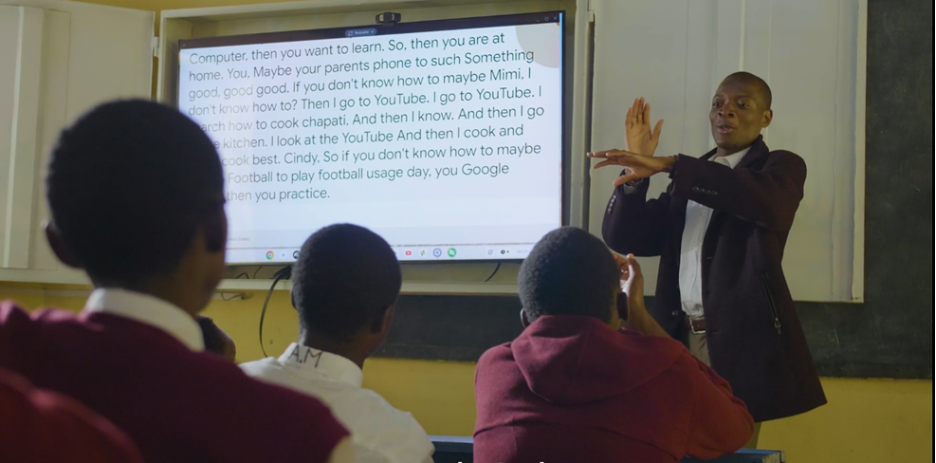
For years, deaf learners in Kenya have faced communication barriers that have limited their access to classroom information. While sign language is central to their education, fluency levels often vary among both teachers and students. This makes it especially challenging to teach complex subjects like science or mathematics that rely on technical or abstract terms. Teachers have had to repeat instructions several times or write everything on the board to ensure students follow along.
To address this, inABLE launched the AI Assistive Technology for the Deaf and Hard of Hearing Pilot Project at Kambui in 2025. The initiative uses real-time captions to make spoken content instantly visible to students. Each classroom is equipped with a 65-inch smart screen, a microphone, and a laptop running the Live Transcribe app. As teachers speak, the app converts speech into text and displays it on the screen. The pilot began by upgrading four classrooms, a computer lab, and a common room, benefiting over 108 students and 15 teachers so far.
Teachers received hands-on training on how to use microphones effectively and adjust their speech for accurate captioning. Students also learned how to follow the captions during lessons and review transcripts afterward. The result has been more interactive classes and less repetition.
“It is amazing to see students who used to stay quiet now raising their hands with confidence. The captions gave them a voice,” says English teacher Jennifer Kuria. Students have expressed the same excitement. One shared, “Before the captions, I used to guess what the teacher was saying. Now I can follow every word. ”
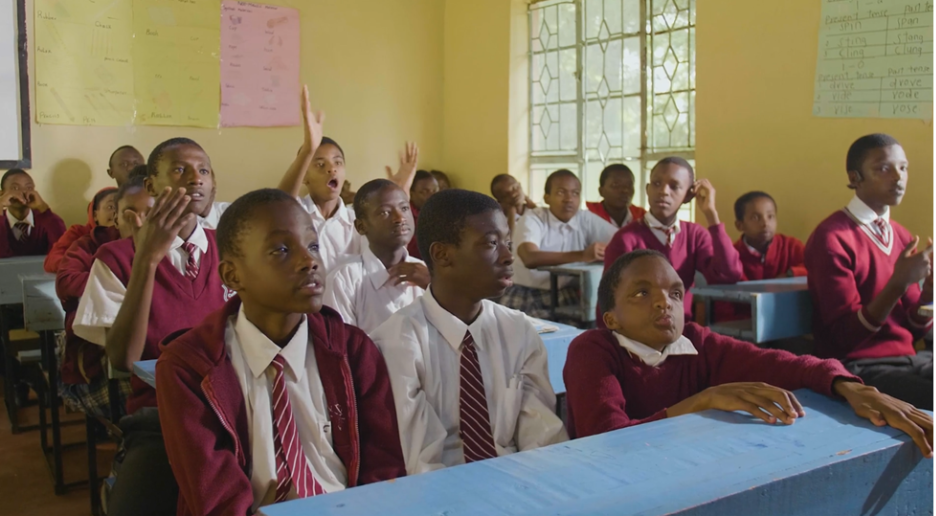
The captions have improved comprehension and participation. Teachers now spend less time repeating instructions, and students are engaging more actively in discussions. Reading and writing skills are also improving as learners get more exposure to written English in real time. The integration of captioning has strengthened collaboration in the classroom. Students who once struggled to communicate now work more confidently with their peers. Teachers have noticed that lessons flow more smoothly, and classroom discussions feel more balanced.
Already, the system has logged over 700 hours of classroom use, reflecting steady adoption and trust in the technology. The approach complements sign language instruction rather than replacing it, thereby creating a richer and more inclusive learning environment.

Beyond its impact on learning, the project has revealed important insights into what makes assistive technology effective in schools. Reliable internet connection, high-quality microphones, and continuous teacher support are essential for accurate captions and consistent classroom use. For inABLE and Google, these learnings are guiding improvements to the system and informing plans to replicate the model in other schools across Kenya and, eventually, beyond. The partners envision a future where every deaf learner can access lessons without communication barriers.
At Kambui, technology has not replaced sign language or human interaction; it has deepened them. As pre-technical studies teacher William Onyango puts it, “Technology didn’t replace communication. It restored it. Now, every learner belongs.”
The success of this pilot shows that when innovation is designed around real classroom needs, it can transform not just how students learn but how they connect, participate, and belong.
Story by Faith Rimas, MPRSK-inABLE