Starting Early: Digital Skills Training for Preschoolers Who Are Visually Impaired

inableAdmin
In Kenya, where digital literacy is becoming essential for future success, Likoni Primary School for the Blind is taking a bold and exciting step forward. Through inABLE’s Assistive Technology Labs Program and support from Google, the school has introduced Chromebooks for digital skills training for its youngest students, those in PP1 and PP2, aged just 4 to 6 years. This early digital education serves as a vital step toward equal access and opportunity for learners who are blind and visually impaired.
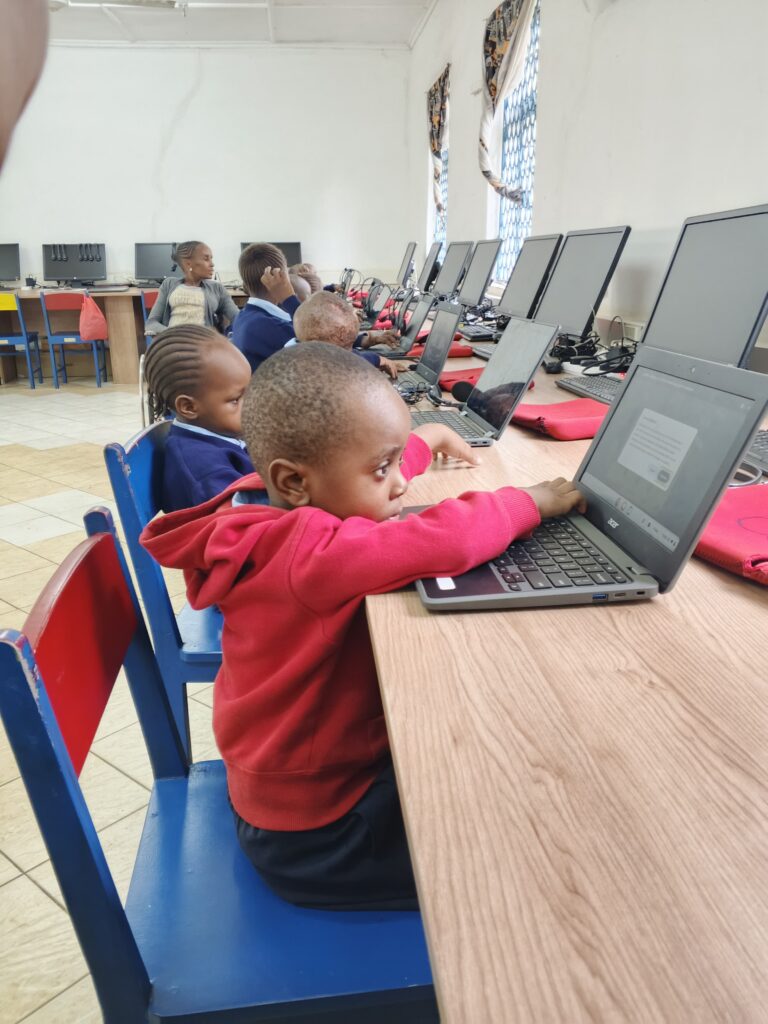
Since 2009, inABLE has worked to close the digital divide for students with visual disabilities in Kenya. With Assistive Technology Labs established in eight schools for the blind, including Likoni, over 14,500 students and 150 teachers have received more than 44,000 hours of digital skills training. These labs provide learners with access to voice-to-text screen readers and Braille instruction, creating a pathway toward educational success and employment opportunities.
At Likoni, the integration of digital skills training marks a significant milestone. For many of these young learners, this is their first experience using a computer. The focus is not only on introducing technology but also on equipping children with foundational keyboard skills that will serve them for years to come. By developing muscle memory, letter recognition, and hand-eye coordination at this early stage, they are laying the groundwork for future digital literacy.
For blind learners in particular, keyboard mastery is essential. It allows them to navigate digital tools using screen readers with confidence and accuracy. Beginning this journey in PP1 and PP2 ensures that visually impaired children are not left behind in an increasingly digital world. Instead, they move forward with the same enthusiasm and readiness as their sighted peers.
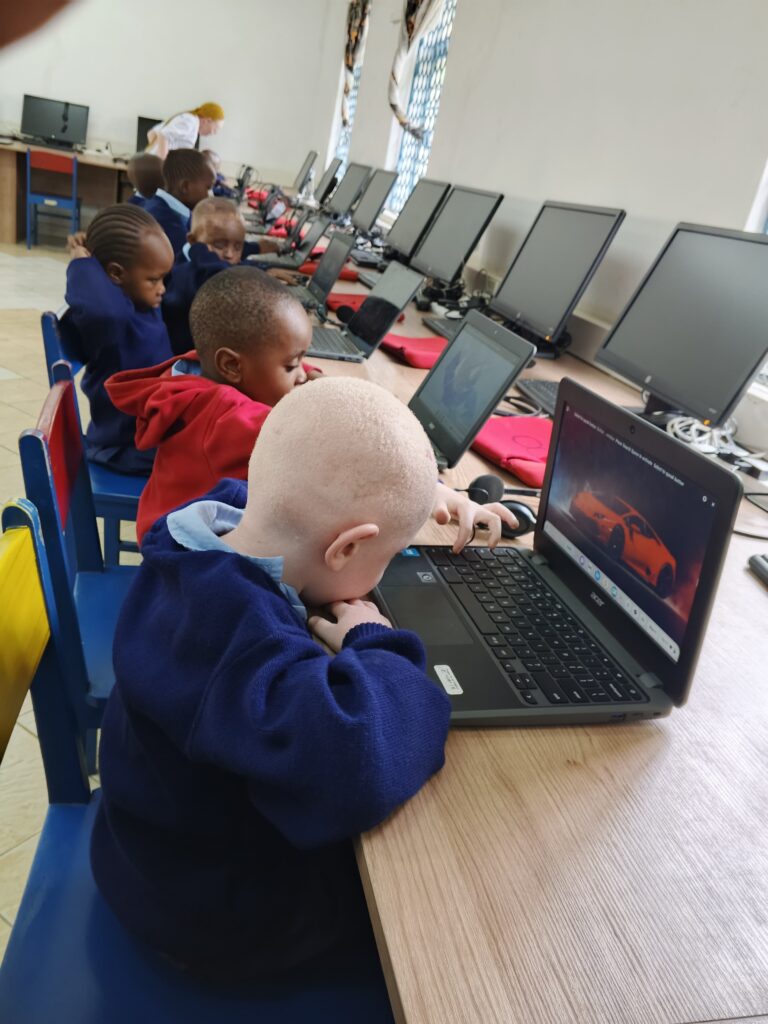
Guiding this transformative learning process is Pauline Kunyonga, a dedicated computer instructor and intern who uses a wheelchair. Alongside fellow instructors Eunice Kilungu and Charity Samba, Pauline plays a hands-on role in supporting each child’s progress. Her instruction is clear and encouraging, often calling out to the class, “Let’s all go in line one. Are we all in line one? Let’s start from the first key.” Her approach makes learning both accessible and engaging, creating a classroom environment where every child feels seen and supported.
The impact is already visible. There is a new level of focus and excitement in the computer lab as learners navigate Chromebooks with growing confidence. The shift from shared desktops to individual Chromebooks for upper primary has sparked a new motivation among the lower classes. They now see computer use not just as a subject, but as a personal and empowering tool.
This initiative reflects inABLE’s long-standing commitment to bridging the gap between blind and sighted communities in Kenya. By providing learners at Likoni Primary School for the Blind with digital tools from an early age, the program is investing in their long-term success, ensuring they acquire the skills necessary to pursue education, careers, and full participation in society.
The journey begins with a keyboard, but its impact could shape a lifetime.
If you would like to partner with us in this program, please email partnerships@inable.org or donate through https://inable.org/get-involved/
Written by Charity Samba and Faith Rimas, inABLE