inABLE Partners with Double Tap Podcast to Amplify Global Accessibility Voices

inableAdmin
At the Inclusive Africa Conference 2025, inABLE partnered with the Double Tap podcast to highlight lived experiences, innovations, and challenges in disability inclusion. This collaboration aimed to extend the conference’s conversations to a global audience through a special episode titled Double Time, hosted by Steven Scott and Shaun Preece.

Dr. Sachin Pavithran, Executive Director of the United States Access Board, brought a global outlook shaped by his work on accessibility standards across transport, infrastructure, and ICT in the U.S. “Accessibility is not a national issue; it is a global issue,” he said. Reflecting on his experiences in Nairobi, he added, “You see people doing so much with so little. There’s innovation in places where resources are scarce. That’s something we should learn from.”
He addressed the political challenges facing disability policy in the U.S., particularly concerns around Medicaid and Medicare. “The fears are not unfounded,” he noted. “We must advocate in ways that resonate across the political divide. The economic case for accessibility remains one of the strongest tools available.” Dr. Pavithran also compared enforcement approaches, noting Norway’s use of daily fines for non-compliance, in contrast to the U.S. system, which often relies on lawsuits. “That model is not working well. What we need is industry commitment.”
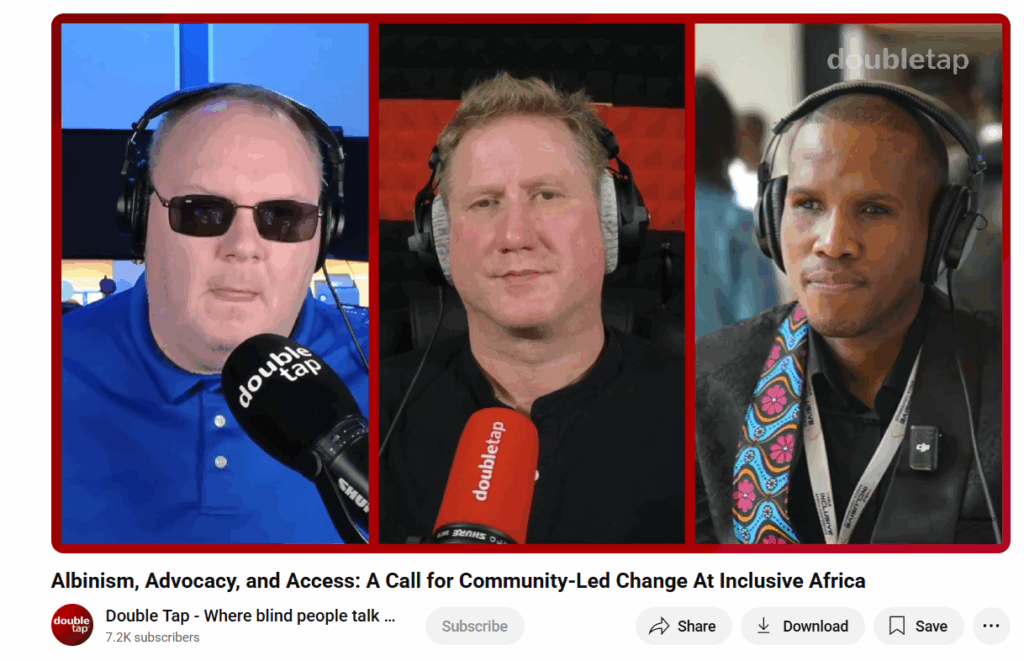
Senzo Mbonabi, Chief Operations Officer at Lead Change Developments in South Africa, shared how their programs use technology to empower communities facing unemployment and poverty. “We train young people at no cost using CSI (Corporate Social Investment) funds,” he said. “They begin with basic skills and leave with advanced ICT competencies. We then link them to job opportunities or help them build cooperatives that serve their communities.”
He emphasized the inclusive design of their model. “We go beyond training. We provide workspace and address infrastructure barriers. If someone lacks internet or transport, our center fills that gap.” He also underscored the importance of preparing youth with disabilities for the workforce. “There’s interest in hiring youth with disabilities. What employers need are skilled, job-ready candidates. That’s where we come in.”
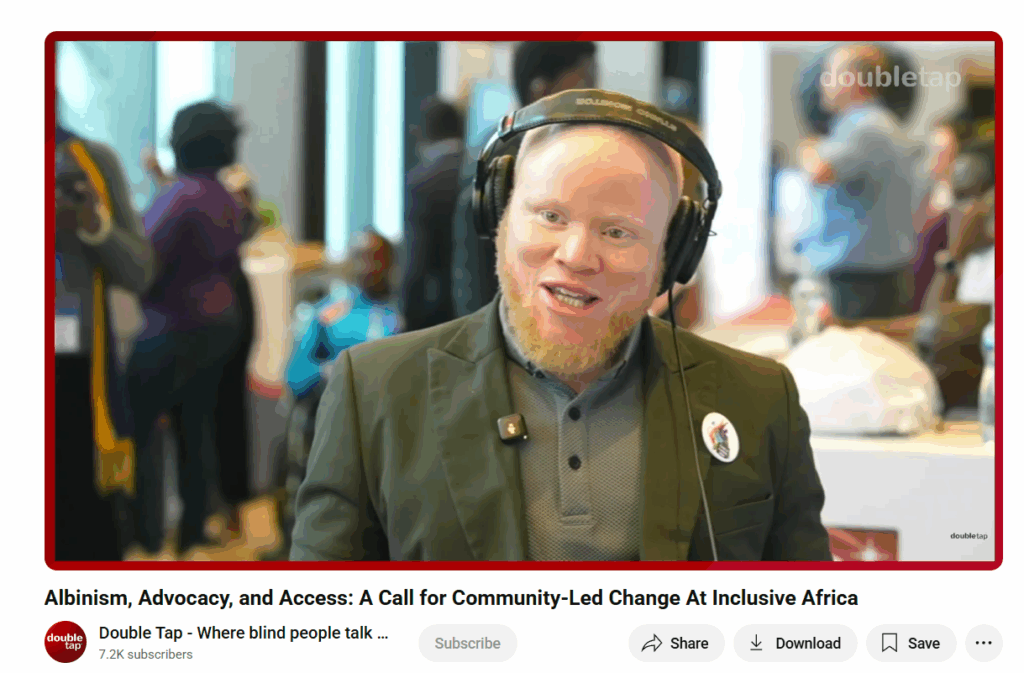
Alan Herbert, Executive Director of Black Albinism, spoke from a deep personal place. His organization uses sports, the arts, and digital tools to advocate for persons with albinism. He highlighted the discrimination faced by this community. “Persons with albinism are often seen as not white enough or not Black enough. That in-between identity results in exclusion from both sides.”
He spoke candidly about ongoing risks. “Ritual killings still occur in some areas, especially around elections. The myth that our body parts hold power hasn’t disappeared.” He also addressed health concerns. “Skin cancer remains one of the leading causes of death among people with albinism in Africa due to prolonged sun exposure.”
Alan also opened up about the emotional weight of family rejection. “Some of us are abandoned by our fathers—and sometimes our mothers. That rejection affects your confidence and sense of belonging. The emotional toll is often greater than the physical challenges.”
He acknowledged Kenya’s recent progress. “The amendment to the Persons with Disabilities Act now explicitly includes albinism. That legal recognition gives us something to stand on. It’s a step other countries can learn from.”
On digital advocacy, Alan described both its challenges and power. “Online spaces can be harsh. Cyberbullying is real. But we’re helping persons with albinism use digital tools to share their stories, build content, and connect in supportive online communities. It’s a way to take back the narrative.”
As the episode closed, hosts Steven and Shaun reflected on the impact of the discussions. “These are difficult conversations,” Steven said. “But they’re necessary. That’s what the Inclusive Africa Conference is about: listening, learning, and striving for better outcomes.”
Through this partnership, inABLE and Double Tap created space for honest conversations across continents. Whether through technology, advocacy, or community work, one message came through clearly: inclusion must be intentional, and change starts with action.
Watch the full episode here: https://youtu.be/1WO71jqLPfI?si=Ixqu3LvChJajv6zZ
Written by Faith Rimas, Communications Assistant, inABLE