How Assistive Technology is Transforming Learning at Thika School for the Visually Impaired

inableAdmin
At Thika School for the Visually Impaired, the glow of computer screens means more than just light. It represents opportunity, independence, and a future filled with possibilities. Through inABLE’s Assistive Technology Labs, which are part of a network of eight labs across Kenya serving over 15,000 learners and 150 teachers, students are not only bridging the digital divide but are also discovering their voices, their skills, and their dreams.
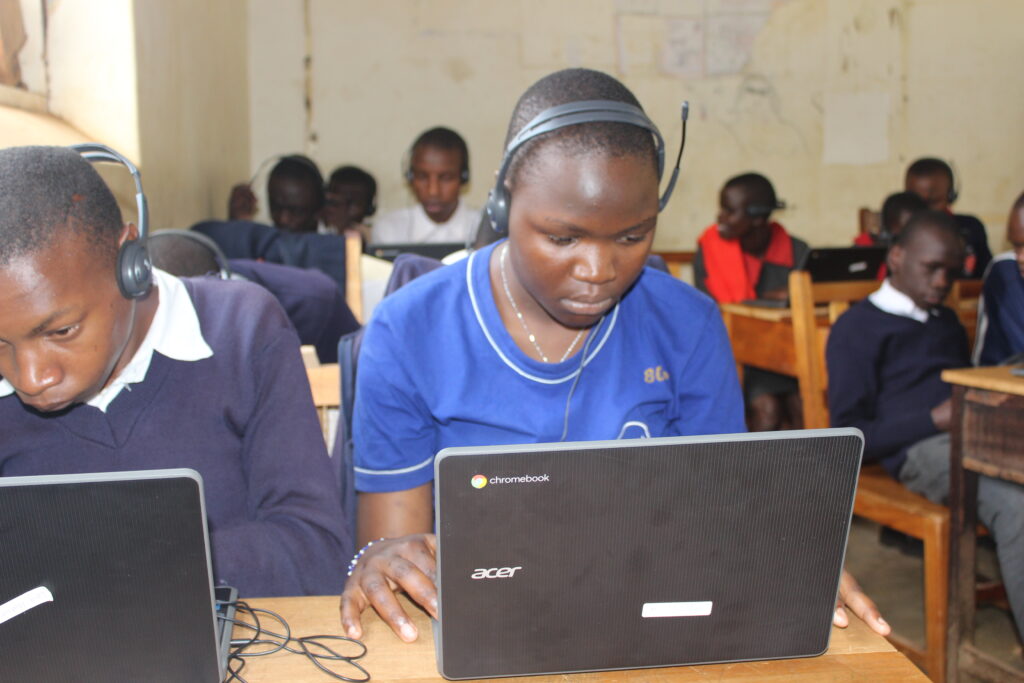
For many of these learners, accessing knowledge was once a far-fetched dream. Traditional methods such as Braille books, though important, often limited the pace and scope of learning, with entire classrooms sometimes relying on just a handful of texts. Now, with screen readers, accessible software, 600+ Chromebooks, and internet-enabled devices, visually impaired students can access global knowledge in real time and engage with digital resources at the same speed as their sighted peers.
This shift is transforming learning outcomes, building confidence, and preparing students for higher education and meaningful careers.
Confidence in Learning and Coding
Bradinah, a Grade 6 student, has embraced this digital shift with enthusiasm. “Assistive technology has helped me research, learn, communicate, and even code in HTML. I know it will continue to support me as I move to Grade 7,” she shares with confidence. For her, technology is not just a tool but also a trusted companion on her academic journey.
Skills for the Future
Blessing, a Grade 9 student preparing to join high school, reflects on how the labs have prepared her for the next chapter. “The lab has taught me coding and how to use the internet for research. These skills will help me as I transition to high school.” For her, learning how to log onto the internet and conduct independent research is both a technical skill and a life skill that will shape her future education.
Technology as a Gateway to Independence
Higgines, also in Grade 9, sees assistive technology as a gateway to independence and exploration. “I like researching mobile technology and because of screen readers, I have been able to do so since I started learning. I can now perfectly use Google products such as Google Meet, type documents, and even code,” he explains. What once seemed impossible is now part of his daily routine.
Breaking Barriers Once Thought Impossible
For Daniel, in Grade 10, the labs have opened doors he never imagined. “I didn’t have an idea if someday, somehow, I could download something and transfer it to my portable storage device. But with screen reader support, I’ve been able to do so. Assistive technology has helped me a lot in conducting research and classwork. Without it, many of us would still be struggling.” His story is a powerful reminder of how small shifts in access can create big transformations in learning outcomes.
A Future Built on Digital Inclusion
These personal stories reflect the broader impact of inABLE’s mission: to empower African youth with disabilities through technology. The Assistive Technology Labs are not simply classrooms filled with computers. They are incubators of confidence, independence, and ambition. Students are learning to research, code, communicate, and innovate. More importantly, they are proving that with the right tools, every learner has the potential to excel.
As Bradinah, Blessing, Higgines, and Daniel show us, technology is more than hardware and software. It is hope, opportunity, and empowerment. At Thika School for the Visually Impaired, the future is being rewritten — one keystroke at a time.
You can help sustain this impact — support inABLE’s Assistive Technology Labs today by donating through our GlobalGiving page: https://www.globalgiving.org/projects/computer-labs-for-the-blind/reports/?subid=104874
Written by Lily Ronoh-Waweru, inABLE.