Mawazo: An Accessible Platform Redefining Mental Health Support for Persons with Disabilities

inableAdmin
Mental health remains a silent battle for many persons with disabilities. Without safe spaces to share their experiences, many end up isolated, stressed, or even depressed. For Valery Olesia, station lead at Thika School for the Blind and a beneficiary of inABLE’s Assistive Technology Labs, this silence was impossible to ignore. “We needed a space where no one feels judged, criticized, or despised,” she explains.
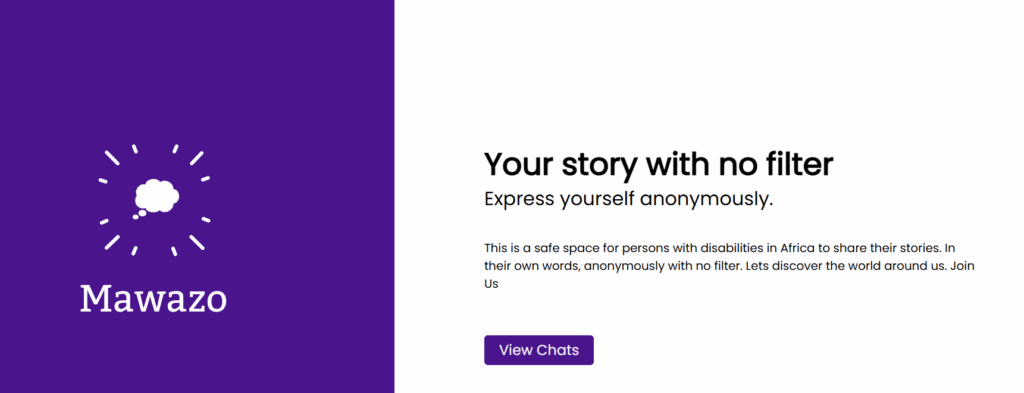
From that need came Mawazo, a Kiswahili word meaning “thoughts.” Created by a team of coders who are blind at inABLE, Mawazo is the first accessible online platform in Africa that enables people with disabilities to discuss mental health openly while remaining anonymous. It is a place where thoughts that were once locked away can finally be spoken, where users can find information, support, and community.
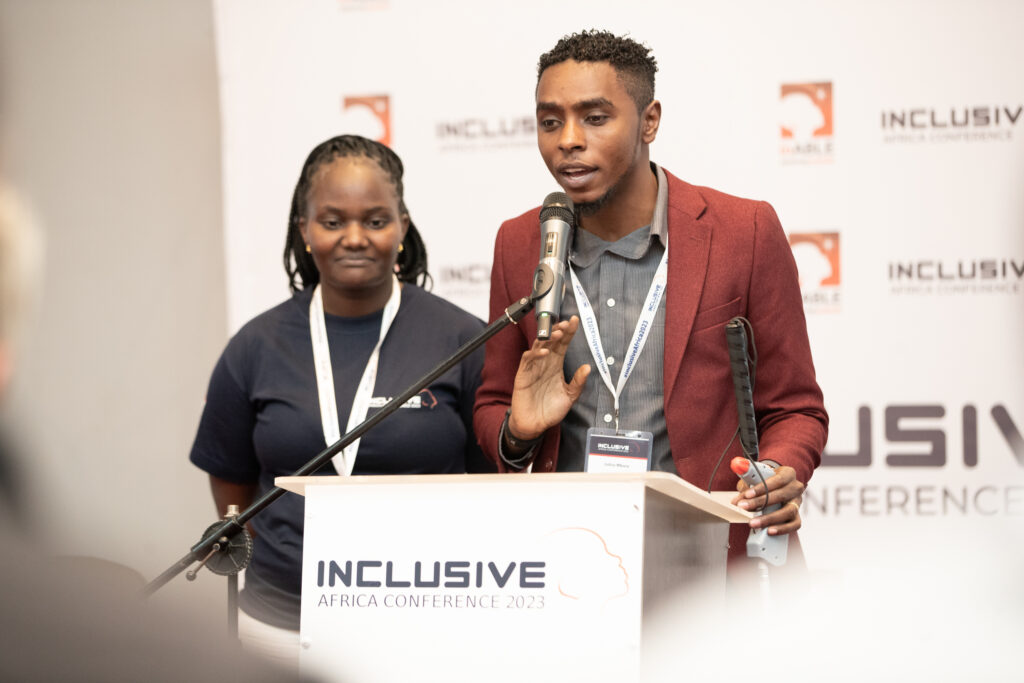
The platform was developed after months of brainstorming, design, coding, and testing. When it was officially launched at the Inclusive Africa Conference 2023, it offered three core features: a welcoming home page, a “start a chat” page where users can share their thoughts, and a “view chats” page to read and respond to others. While simple in design, the platform is groundbreaking because it addresses an urgent need for safe, anonymous mental health support that is inclusive and accessible.
Across Africa, persons with disabilities face major barriers to mental health care. Services are often inaccessible, expensive, or far from reach, and stigma prevents many from seeking help. For young persons with disabilities navigating school, work, or discrimination, the absence of safe outlets often deepens feelings of isolation. Mawazo was created to close this gap.

The platform builds on inABLE’s long-standing experience in digital accessibility and assistive technology. Since 2009, inABLE has worked to empower African youth with disabilities by dismantling barriers in education, employment, and technology access. Its work is rooted in collaboration with the Government of Kenya, global technology leaders such as Google, Microsoft, and Uber, and philanthropic organizations like Mastercard Foundation, alongside over 20 regional organizations of persons with disabilities.
Through its Assistive Technology Programs, inABLE has set up eight digital labs in special schools for the blind and Deaf in Kenya. More than 15,000 students and 150 teachers have received training totaling 44,400 hours. These labs provide essential digital literacy and inclusive learning opportunities. For visually impaired learners, acquiring keyboard skills over six months opens up access to communication and knowledge that transforms education and independence. Teachers also gain digital tools that improve the teaching of complex subjects like Mathematics and Science. Support from partners such as Google, through Chromebook donations and teacher training, has played a critical role in this progress.
Mawazo extends this tradition of innovation into the mental health space. Current features create an open, safe environment for anonymous conversations, and plans to include professional counseling sessions, peer support groups, storytelling spaces, and integration with mobile platforms and low-bandwidth tools such as WhatsApp and SMS. These additions will ensure that the platform reaches rural and underserved communities, linking digital support with offline services such as clinics and community groups.
Looking ahead, Mawazo aims to expand its reach across Kenya and into other African countries, building partnerships with public institutions, universities, and organizations of persons with disabilities. Its long-term vision is to establish itself as a trusted, inclusive platform where persons with disabilities can find mental health resources, support, and community on their own terms.
Mawazo, developed by persons with disabilities, demonstrates how innovation can emerge directly from lived experience. By offering a safe and anonymous space to speak about mental health, it challenges stigma and highlights the role of inclusive technology in addressing the needs of marginalized communities.
The platform is available at www.mawazoafrica.org.
Story by Faith Rimas, MPRSK, inABLE