Likoni School for the Blind Pioneers Inclusive Digital Education

inableAdmin
Likoni Primary School for the Blind has continued to stand out as a model of inclusive digital education through inABLE’s mission to empower students who are blind or have low vision through computer-assistive technology and digital accessibility. The school recently hosted two visits that highlighted how technology is transforming learning for visually impaired students.
The first visit was by Mr. Dickens Ogony, Senior Examination Officer for Special Needs Education – Visual Impairment (SNE-VI) at the Kenya National Examinations Council (KNEC). His visit was prompted by a social media post showcasing how the school was adopting digital exams using Chromebooks. The second visit involved students from Machakos University pursuing Special Needs Education, who came to benchmark inclusive education practices.
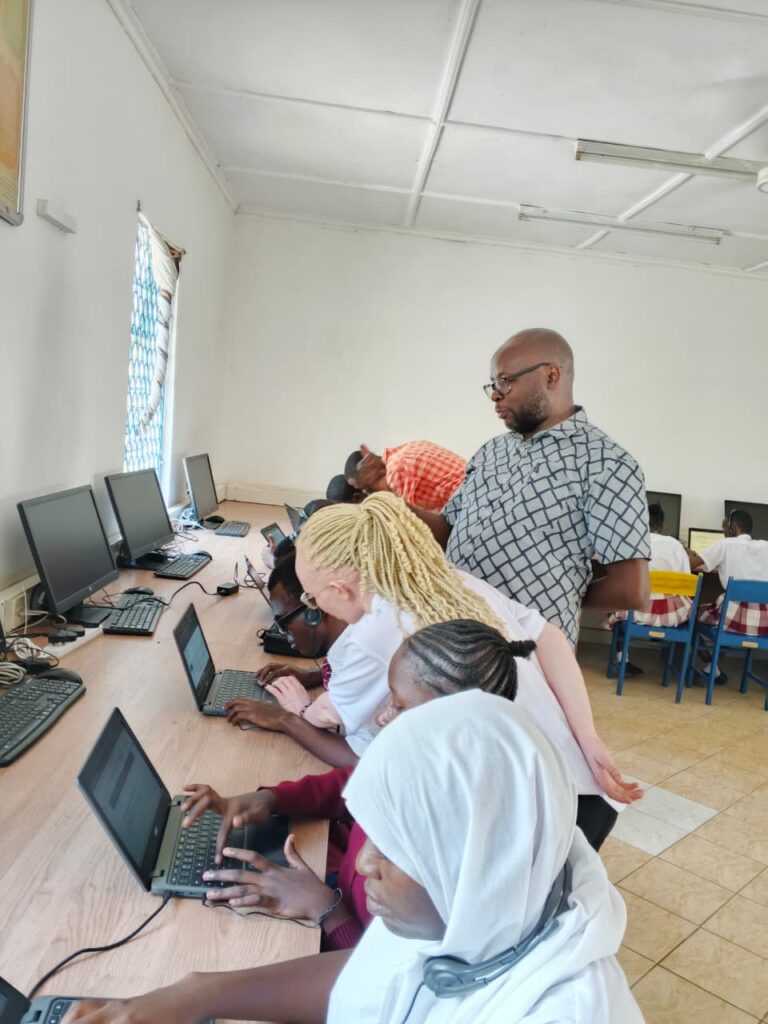
During Mr. Ogony’s visit, teachers and learners demonstrated how digital skills are integrated across all levels from pre-primary (PP1) to Grade 9, through inABLE’s Assistive Technology Lab. The lab is equipped with accessible devices, screen readers, and voice-to-text software that enable students who are blind to independently navigate digital tools. Mr. Ogony was particularly impressed by the keyboard proficiency of PP2 and Grade 1 students.
Teachers showcased how they conduct digital assessments using Google Classroom for class creation and student enrollment, Google Forms for multiple-choice tests, and Google Docs for written exams. The system allows real-time submission tracking and performance analysis, ensuring an accessible and efficient learning experience for all learners.
Mr. Ogony described the digital assessment initiative as “eye-opening” and commended the enthusiasm of teachers, learners, and administrators. He challenged the team to make the upcoming Grade 8 English assessment fully online and encouraged expansion of digital learning to reach visually impaired learners outside special schools. He also suggested exploring the Likoni School for the Blind as a potential examination hub for colleges in future collaborations.
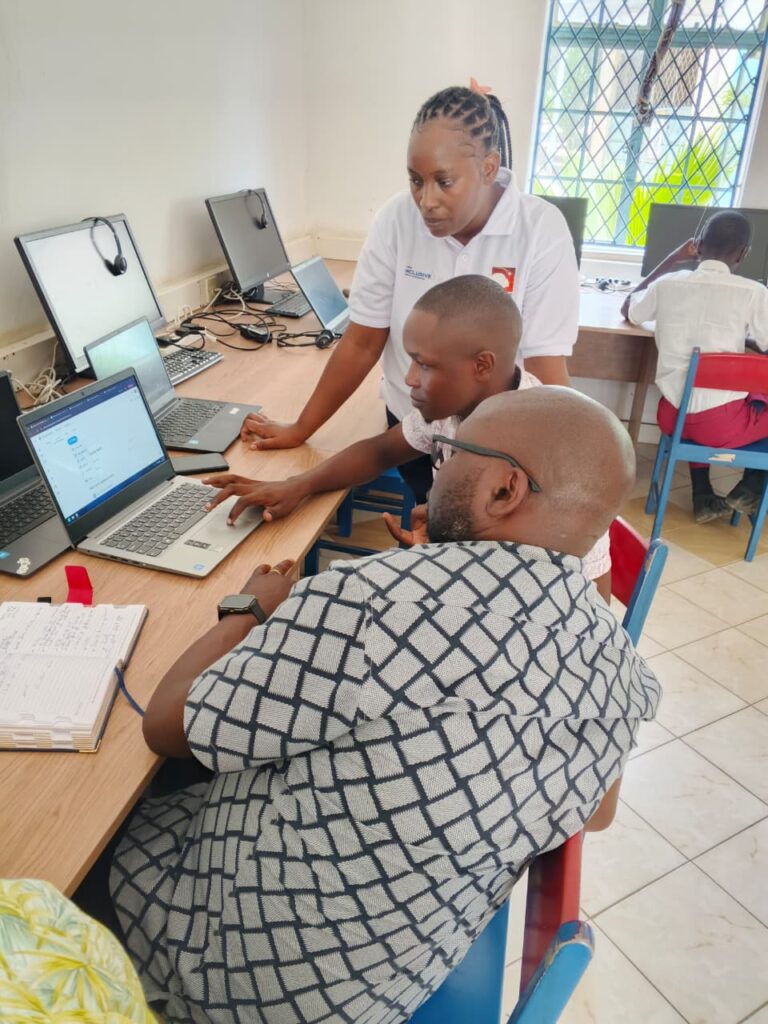
Eunice, the lead assistive technology instructor, credited the school administration, teachers, Google for providing Chromebooks, and the inABLE communications team for their support in promoting the initiative. Anthony, inABLE’s Project Manager, appreciated the visit and praised the school’s efforts, describing the integration of assistive technology as transformative. “The commitment we’ve seen here shows that Likoni is ready to pilot the fully digital Grade 8 assessment,” he said.
A few days later, the school welcomed Machakos University students pursuing Special Needs Education for a benchmarking visit. The visit provided the students with firsthand experience of how assistive technology bridges the gap between blind and sighted learners.
They toured two computer labs that demonstrated the developmental stages of digital literacy. In Lab 1, younger students (PP1 to Grade 2) practiced foundational keyboard and typing skills. In Lab 2, upper-grade students showcased advanced abilities in internet use, emailing, Google Classroom, and even basic coding. This structured approach illustrates how students progress from basic computer familiarity to digital fluency.

The visitors were inspired by the impact of inABLE’s Assistive Technology Labs program, which has equipped learners with valuable employable skills such as web design and multi-device proficiency. Several advanced students at the school now support peer-to-peer training, helping others master computer use and accessibility tools.
The benchmarking experience left a lasting impression on the visiting students, many of whom expressed interest in completing their teaching practice at Likoni School for the Blind.
Through its Assistive Technology Labs established by inABLE, Likoni School for the Blind continues to prove that with the right tools, learners who are blind can thrive academically and develop the digital skills needed to pursue higher education and employment opportunities. These visits reaffirmed the school’s place as a national leader in inclusive, technology-driven education.
Story by Faith Rimas, MPRSK-inABLE