Jasmine Muchilwa: Claiming Deafness as Identity, Culture, and Community

inableAdmin
Disability inclusion begins by listening to people whose lived experience sits at the intersection of disability, culture, technology, and youth leadership. Jasmine Muchilwa’s story reflects that intersection. Her journey as a deaf young woman, storyteller, author, and disability inclusion advocate highlights the barriers many deaf children face and the change that becomes possible when lived experience shapes solutions.
Jasmine was a quiet child long before anyone understood why. As a toddler, she rarely reacted to sound, and family members reassured her mother that she was simply a late talker. The turning point came in daycare, when a teacher noticed that Jasmine never stopped running during sports because she could not hear the whistle.
At home, her mother tested what she feared might be true, banging pots behind her and turning up the television volume. Jasmine did not respond. An audiologist later confirmed the diagnosis: severe to profound hearing loss.
For Jasmine’s parents, the diagnosis marked the start of an isolating journey shaped by stigma and misinformation. “That period was marked by stigma, isolation, and emotional strain,” Jasmine recalls. In her neighbourhood, deafness was linked to witchcraft and curses. Children were warned not to play with her, and within her extended family, blame replaced support.
As a child, Jasmine did not fully understand these dynamics, but she felt their impact. What grounded her was storytelling. “Movies became my primary source of comfort,” she explains. Even without access to spoken dialogue, she learned to read emotion through visuals. Film offered escape, imagination, and early lessons about the power of accessible storytelling.
That sense of separation shifted with cochlear implants. Jasmine often describes her deaf experience as living in outer space, a place of silence where awareness is heightened. Receiving cochlear implants felt like being given “a spaceship that allowed me access to Earth.” The transition was overwhelming, as silence gave way to constant noise. While implants enabled mainstream education and greater independence, they also deepened her understanding of deafness as a meaningful identity, not something to erase.
Speech therapy played a critical role in her development. “It accelerated my speech development and equipped me with the communication skills necessary to thrive academically,” she says. With consistent support from her parents, confidence gradually replaced hesitation, underscoring the importance of early access and family involvement.
At Rosslyn Academy, Jasmine found a school willing to adapt. Through the Learning Support Center, she received accommodations such as assignment extensions, homework support, and extra time during exams. “These accommodations allowed me to perform to the best of my ability,” she explains. Being part of a school community that included students with diverse disabilities also helped normalize differences. Deafness stopped feeling like something to hide.
One defining moment came during her senior-year Cultural Field Studies trip, when she shared her testimony with peers. Speaking about how her disability had shaped her purpose strengthened her confidence and challenged stigma through lived experience.
That same conviction led her to found the Disability Awareness Club. “I created the club to address stigma, inaccessibility, misinformation, and silence surrounding disability,” she says. Under her leadership, the club moved beyond awareness into action. One of its most impactful initiatives was a basketball game between Rosslyn Academy’s varsity teams and the Deaf Opportunity Outreach (DOOR) basketball team, bringing deaf and hearing communities together through shared experience.
Working with DOOR reshaped her understanding of leadership. “It allowed me to see deafness not as something that needs to be fixed, but as a cultural identity that should be respected and celebrated,” she explains.
Her worldview expanded further through the Baret Scholars gap-year program, where she engaged with deaf communities across several continents. Despite differences shaped by culture and policy, she observed shared resilience and pride. A moment in Paris highlighted persistent gaps in accessibility, when people questioned her eligibility for disability accommodations because she could hear and speak using cochlear implants. The experience exposed how narrow definitions of disability exclude many who still need support.
That insight shapes her advocacy today. “Deafness is not a single, uniform experience,” Jasmine says. Her work prioritises solutions grounded in lived reality, particularly around language access, literacy, and education.
Family remains central to her story. Her late mother, who was a disability activist, responded to Jasmine’s diagnosis by building support networks for other parents. Watching her advocate taught Jasmine the power of community and leadership rooted in empathy. Her late father provided unwavering support throughout her early development and education, helping her navigate challenges with care and encouragement.
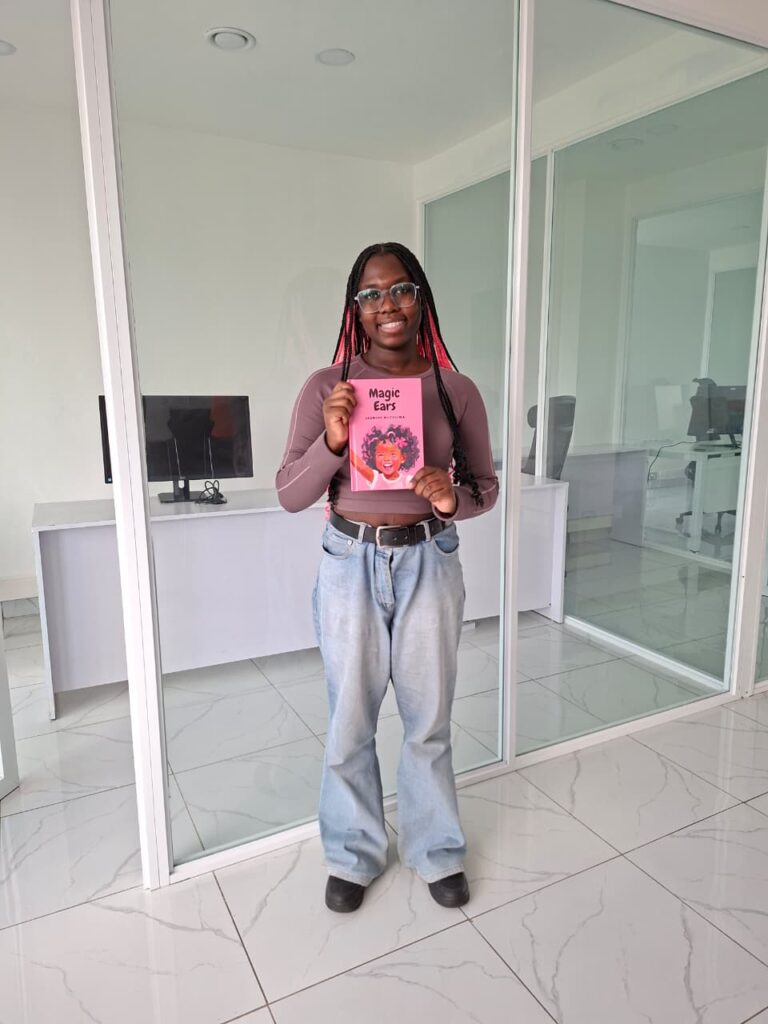
Writing became another form of advocacy. “I rarely saw deaf or hard-of-hearing characters in books,” she says. Through storytelling, Jasmine creates representation she never had and encourages literacy among deaf children. Her message remains consistent: “You are not alone.”
Now preparing to study software engineering at USIU, Jasmine continues exploring how technology and storytelling can widen access. While she values assistive technology, she remains clear that devices alone are not enough. “Accessibility must be affordable and supported by systemic investment in sign language access,” she says.
For the inABLE community, Jasmine’s story underscores the importance of disability-led solutions, youth leadership, and cultural context. The Deaf community is not monolithic, and stigma remains one of the greatest barriers to inclusion. Sustainable progress requires listening to lived experience and supporting spaces where those voices shape change.
To young deaf children, her advice is simple: “Take pride in your deafness and view it as a strength rather than a limitation. Your dreams are valid, and your voice has power.”
Jasmine Muchilwa’s story is not about overcoming deafness. It is about claiming it, honouring its complexity, and widening the path for others.
Story by Faith Rimas Kong’u, MPRSK-in ABLE